The first version of an AI persona engine is deceptively easy to build. Give a language model a few notes, ask for a customer persona, and a polished profile appears in seconds. It reads well. It may even look ready for a client presentation.
Then somebody asks where a particular claim came from.
That question changed the shape of this project. The useful product was not a machine that wrote convincing personas. It was a system that could preserve source context, separate evidence from inference, admit when the research was thin, and let a strategist approve the final result. This case study is about those engineering and product decisions. Client-identifying details and unapproved performance numbers are deliberately left out.
The Business Problem
Agency strategy teams often build personas from workshop notes, CRM exports, analytics, sales interviews, research documents, and previous campaign data. The source material is inconsistent, and manual synthesis creates three problems:
- The reasoning behind a persona is difficult to trace.
- Different strategists produce incompatible formats.
- Updates require repeating much of the research and writing process.
The goal became quite specific: help a strategist turn approved evidence into a consistent first draft without allowing the software to turn a plausible assumption into a research finding.
Requirements and Constraints
The feature list was conventional: projects, reusable templates, source ingestion, drafts, revision history, permissions, APIs, and exports. The boundaries were more important:
- No inference of sensitive personal traits without an approved basis.
- No claim presented as research when it was generated as a hypothesis.
- No customer data exposed across agency accounts.
- No automatic campaign activation from an unreviewed persona.
- No dependence on one model provider for the entire product.
Those decisions shaped the data model before we spent much time on prompts. That order saved us from building clever generation on top of an unsafe product model.
System Architecture
We separated the application into four layers, partly for scale and mostly so that each failure could be understood:
- Evidence layer: stores source records, permissions, timestamps, and project ownership.
- Retrieval layer: selects relevant approved evidence for a requested persona section.
- Generation layer: creates a typed draft with evidence references and explicit unknowns.
- Application layer: handles users, review, comments, versioning, exports, and integrations.
Generation returns a typed structure rather than an unbounded block of prose. Goals, barriers, buying context, objections, preferred information sources, and evidence notes each have a known place. Validation cannot tell us whether an idea is strategically brilliant, but it can stop malformed or incomplete output before it reaches the interface.
Evidence, Retrieval, and Prompt Design
Source material is normalized with metadata such as project, source type, date, market, product, and access level. Retrieval uses both semantic similarity and metadata filters so a persona for one market cannot silently pull evidence from another.
The prompt distinguishes three categories:
- Supported observation: directly grounded in supplied evidence.
- Reasoned inference: plausible but requires strategist confirmation.
- Unknown: insufficient evidence; the system should ask for research rather than fill the gap.
This simple distinction improved review quality more than any elaborate prompt we tried. It gave the model somewhere to put uncertainty instead of quietly disguising it as confidence.
Product Interface and Human Review
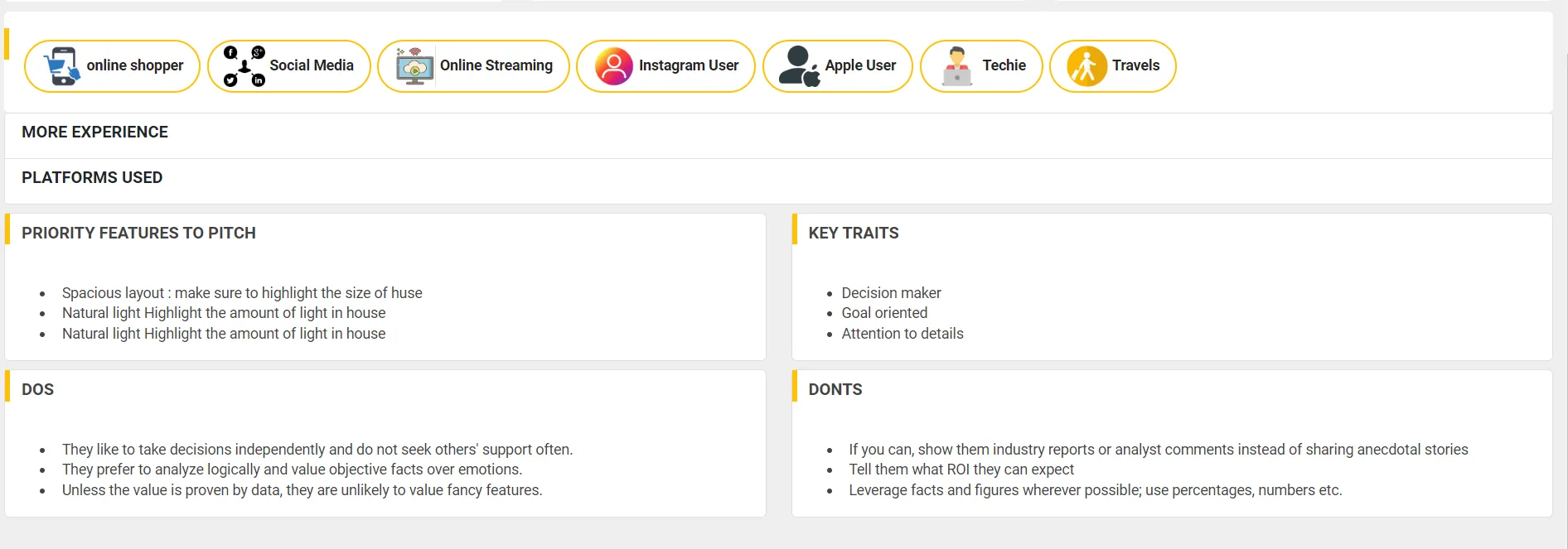
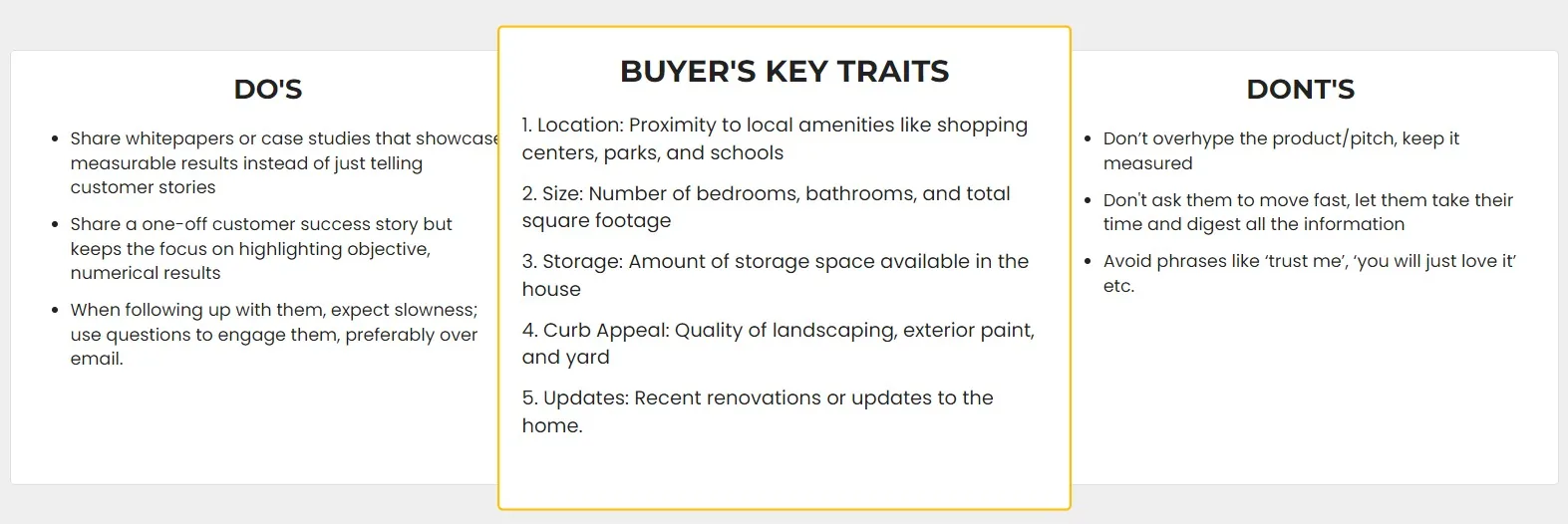
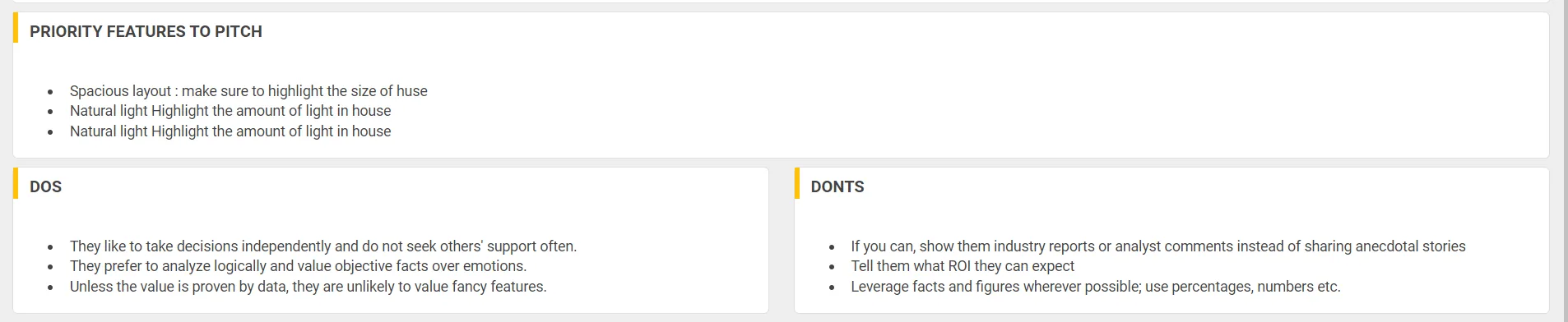
The interface presents generated sections beside evidence notes and review status. Strategists can edit, reject, regenerate a section, or mark it approved without replacing the entire persona. Version history records what changed and who approved it.
Exports use the approved version only. This prevents an experimental regeneration from appearing in a client deck or downstream API by accident.
Evaluation Strategy
We evaluated the workflow using representative source packs and expected outputs. Tests covered schema validity, evidence relevance, unsupported claims, cross-project leakage, sensitive-trait behavior, consistency across repeated runs, and latency.
Human review remained necessary because perfectly valid JSON can contain a useless idea. Reviewers looked for specificity, evidence alignment, internal consistency, and whether a strategist could actually use the result. The failures became regression cases, which meant the next model or prompt change had to earn its place rather than merely feel better in a demo.
Security and Privacy Controls
Tenant identity is applied at query time and enforced in application authorization. Sensitive fields are minimized, access is role-based, and logs avoid storing unnecessary prompt content. Retention and deletion rules are defined per project. Provider and deployment choices can change when the source data requires a private boundary.
For systems handling personal data, legal and privacy review is separate from technical implementation. An AI feature does not remove the organization’s responsibility to establish a lawful purpose and appropriate consent.
Engineering Decisions That Reduced Risk
- Typed outputs instead of parsing arbitrary prose.
- Provider abstraction around generation and embeddings.
- Background jobs for ingestion and long-running exports.
- Idempotent processing so retries do not duplicate records.
- Explicit human approval before publication or downstream use.
- Monitoring for failures, latency, token usage, and retrieval gaps.
- Source and prompt versioning so outputs can be reproduced.
None of these controls is glamorous. They are ordinary software engineering applied to an AI product, which is precisely why the product became dependable enough to use.
What We Would Validate Next
The next product questions are operational: which source types improve drafts most, where reviewers spend time, which fields are routinely rejected, whether users understand evidence versus inference, and whether exports fit real campaign workflows. Those observations should guide development before adding autonomous features.
Frequently Asked Questions
What data does an AI persona engine need?
Useful inputs can include approved interviews, CRM segments, analytics summaries, sales notes, product research, campaign results, and support themes. More data is not automatically better; relevance, consent, freshness, and clear ownership matter.
Can an AI persona replace customer research?
No. It can structure and synthesize available evidence, expose gaps, and speed up drafting. It cannot make missing evidence true. Generated hypotheses should be validated with customers and campaign data.
How do you stop the model from inventing details?
Constrain generation to retrieved evidence, label inferences, require unknowns when evidence is absent, validate the output schema, and keep human approval in the workflow. Evaluation sets should include unsupported and adversarial requests.
Can this connect to a CRM or marketing platform?
Yes, through scoped APIs and approved exports. Integration should use the reviewed persona version and respect permissions. See our software development company in Faridabad approach for integration and ownership practices.
Does NodeAscend build similar AI systems?
Yes. Our AI automation company in Faridabad work covers RAG systems, agents, chatbots, workflow automation, evaluation, and private deployment options.
Conclusion
The persona engine became useful when it was treated as a governed software product rather than a prompt demo. Structured evidence, typed outputs, evaluation, authorization, and human review made the workflow maintainable and safer to operate.